I trace vectors of pull
I follow the direction of movement around your brows, cheeks, and mouth. I study the patterns of lift and downward pull as your expression changes.
The Petro Precision Method™
At my Vestavia Hills practice, I use advanced facial-mapping software to visualize your vectors of pull in real time—the directions of movement that shape your brow, your smile, and your expression. I compare right with left, study how those patterns change, and bring my interpretation to every treatment decision.
I have spent hours refining this method because those details matter. My purpose: more precision, more control, and more lift.
Let’s Make A Plan ↗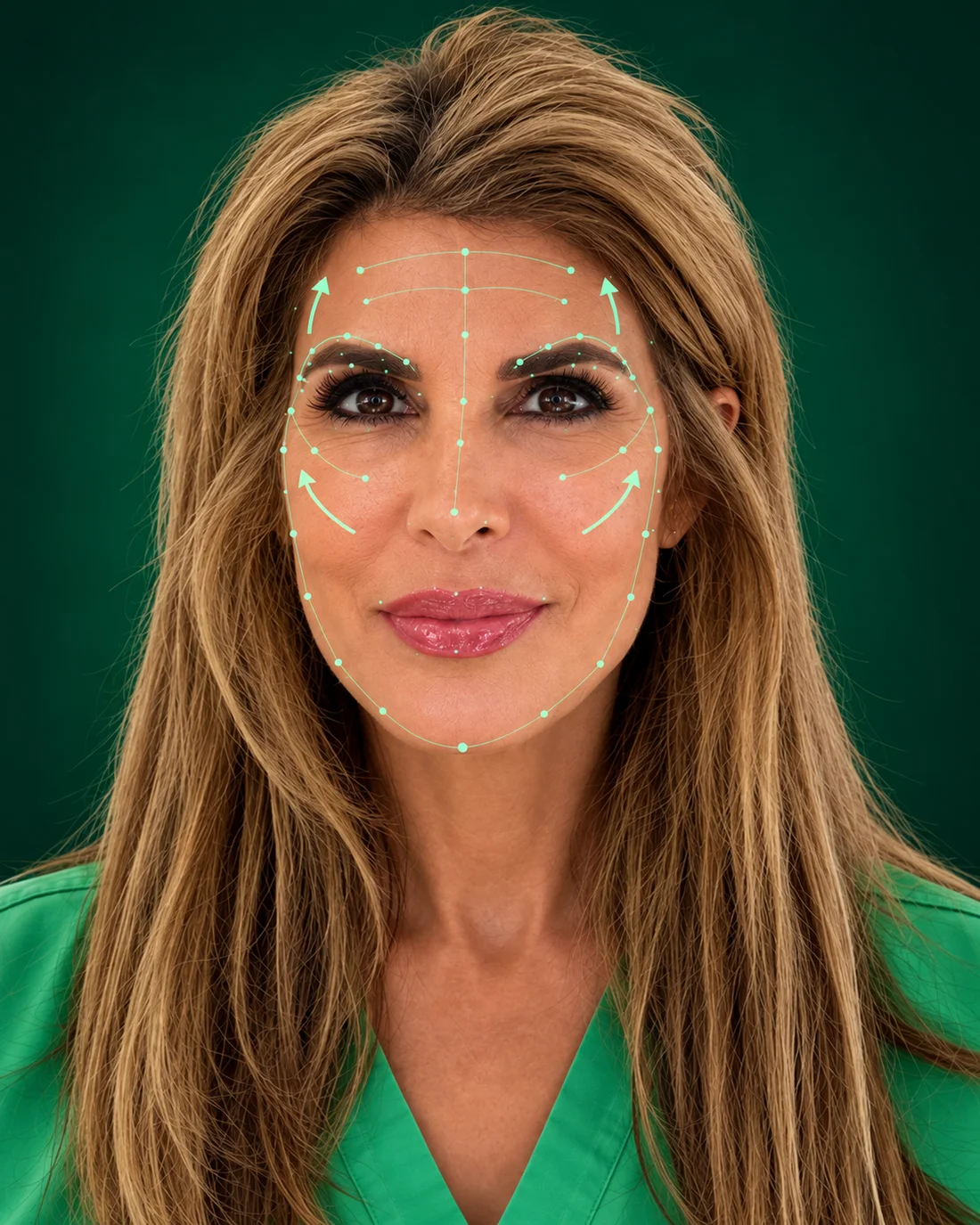
Inside my method
I use real-time facial-mapping software to examine your expression as it unfolds. I study vectors of pull, compare the right and left sides, and follow the changing relationships between your brow, cheeks, and smile.
During your in-office mapping session, I guide you through a few minutes of expression in front of a camera. I use that live capture to build a detailed view of your movement, then interpret it with you as I develop your personal treatment plan.
I follow the direction of movement around your brows, cheeks, and mouth. I study the patterns of lift and downward pull as your expression changes.
I examine how each side contributes to your smile and brow movement. I use those differences to inform a plan specific to your facial balance.
I bring the moving map, my knowledge of facial anatomy, and your goals together. I decide how those details should inform treatment placement and amount.
Where I look for lift
I study each area as part of a moving whole. I connect brow position, lip movement, smile balance, and neck pull as I plan for more precision, more control, and more lift.
My closer look · Neck & jawline
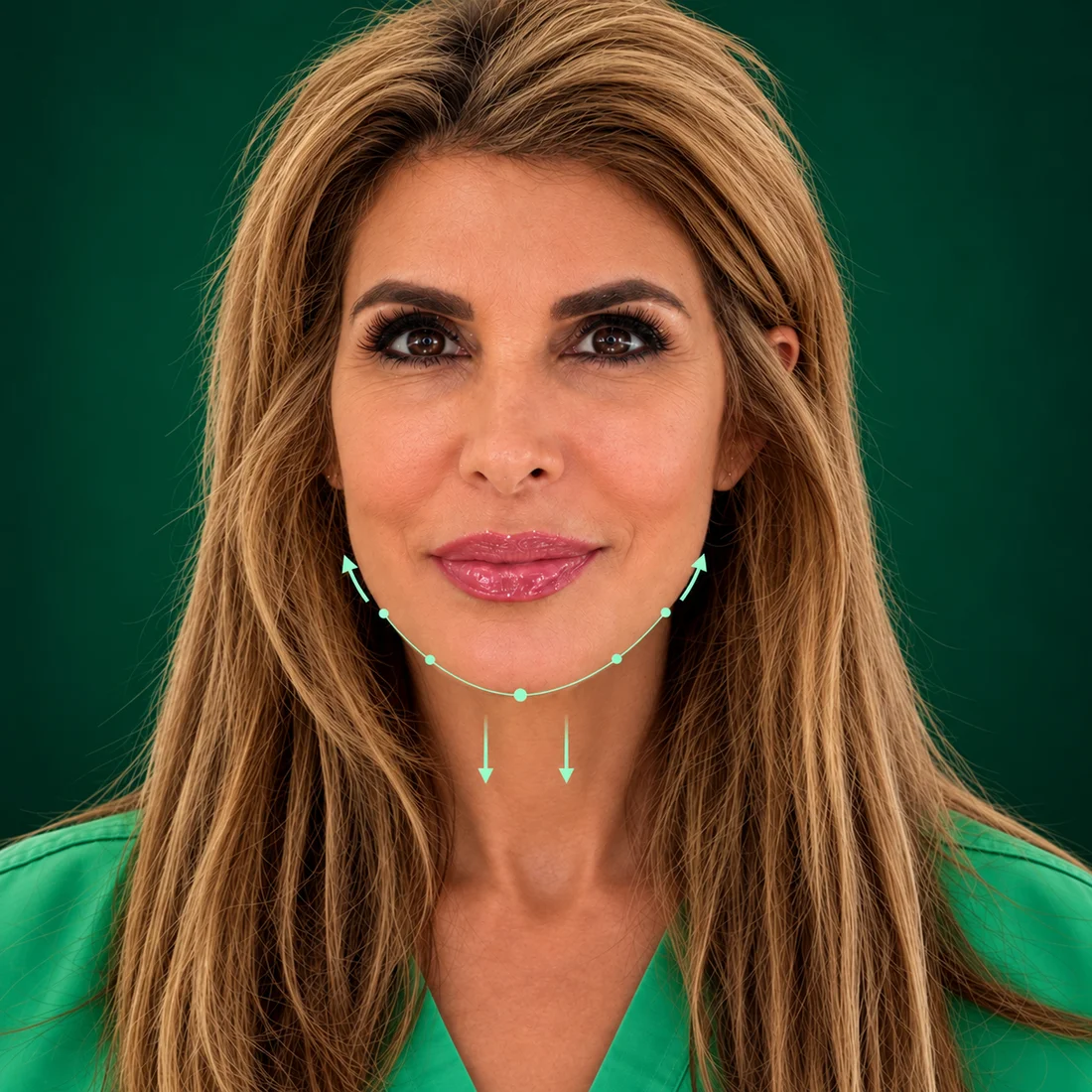
I study what pulls down
as I plan for lift.
I evaluate the platysma—the broad muscle in the neck—and how its downward pull relates to your jawline. I use the downward arrows here to illustrate that direction.
I assess whether relaxing selected downward-pulling muscle activity could support a more defined jawline. I use the upward arrows to show the intended direction of lift.
I compare your movement from side to side and assess your anatomy in person before deciding whether a Nefertiti lift fits your goals.
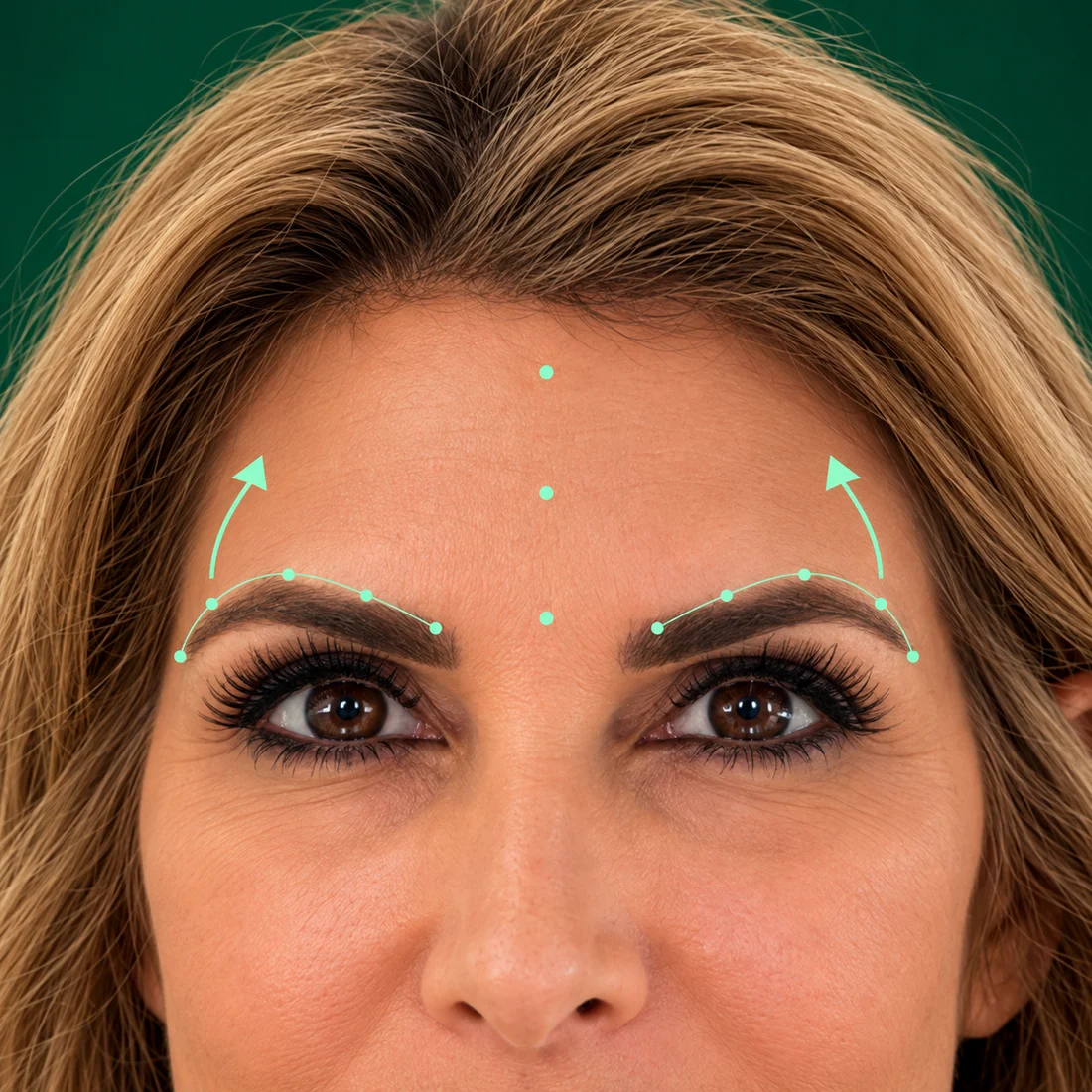
Brow position · Right-to-left balance
I compare how each brow rises and where I see downward pull. I interpret those differences as I plan for lift and balance around your eyes.
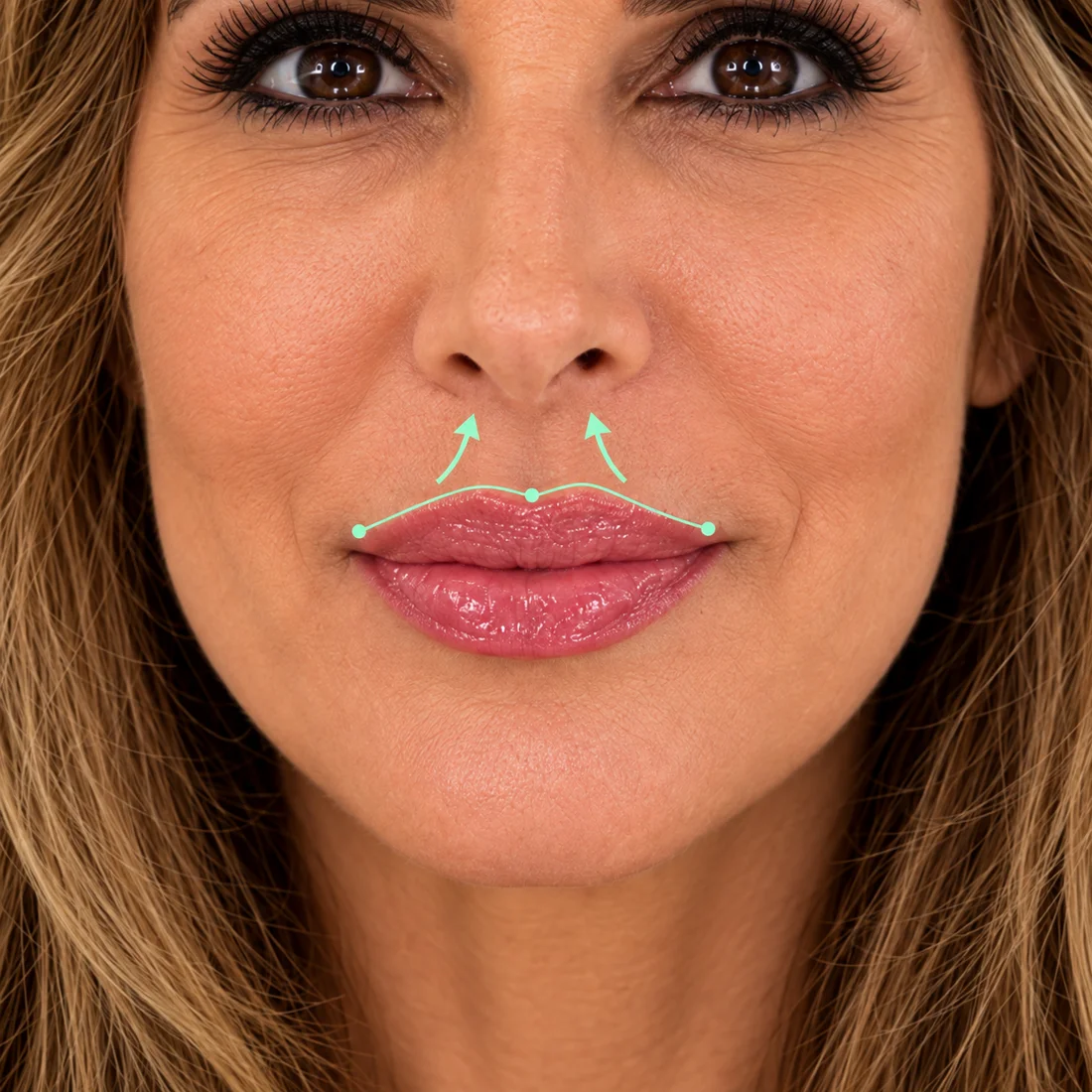
Upper-lip movement · Lip show
I study how your upper lip moves from rest to smile, how much lip shows, and how the two sides respond. I bring that detail into my assessment of your lip proportions and options for lift.
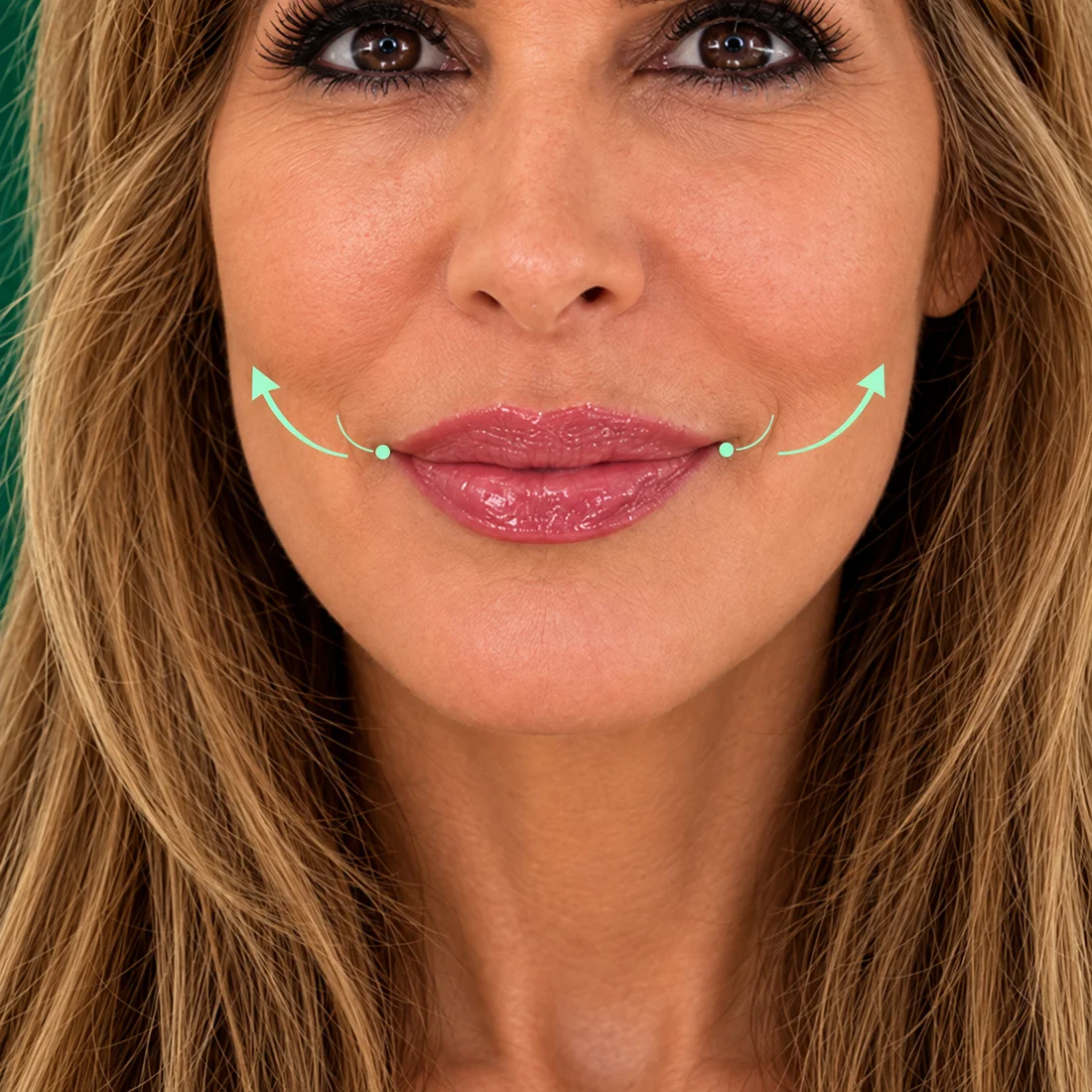
Smile dynamics · Direction of pull
I trace the movement at each corner of your mouth and compare the direction of pull on the right and left. I use those patterns to understand the balance of your smile.
I use these edited illustrations to explain the areas I evaluate. I create and interpret your individual live map during your consultation.
The point of precision
I use the detail in your movement map to inform where I treat and how much I use.
I compare right-to-left patterns and the way your smile changes before I plan for balance.
I study upward and downward vectors of pull as I plan for lift that respects your expression.
My 1-on-1 approach
I plan The Petro Precision Lift™ through a detailed study of your facial movement. I bring your live map and my clinical judgment into the same conversation, so I can explain the reasoning behind my recommendations.
Let’s Make A Plan ↗I guide you through a few minutes of expression in front of a camera while I use advanced software to map your facial movement in real time.
I review your vectors of pull and right-to-left differences with you. I connect that detail with your goals to explain my recommendations for placement, amount, and balance.
If we decide to proceed, I give your care my undivided focus and keep the result personal to you.
Questions I hear
I combine real-time facial mapping with my clinical interpretation to develop a personal aesthetic plan. I study vectors of pull, right-to-left differences, and the way your expression changes to plan for more precision, more control, and more lift.
It is the name I give my approach to creating more lift through careful, individualized treatment planning. I will explain whether any treatment is appropriate after I see you in person.
For now, I offer this experience in person. I want to see your natural expression and talk with you before I recommend care.
I guide you through a few minutes of expression in front of a camera during your in-office session. I use advanced facial-mapping software to visualize movement in real time, study vectors of pull, and compare right with left. I then interpret those patterns with you and explain how they inform my treatment plan.
I use camera-based facial mapping, not an EMG test. I map visible movement and interpret the resulting patterns; I do not attach electrodes or measure electrical muscle activity.