In the mirror, a fold of upper eyelid skin and a low brow can look much the same. At your consultation in Vestavia Hills, Dr. Melanie Petro examines where your brow rests, where the lashes sit and how much skin folds over the crease. Upper blepharoplasty removes excess upper lid skin.
A complimentary consultation with Dr. Melanie Petro in Vestavia Hills, serving Birmingham.
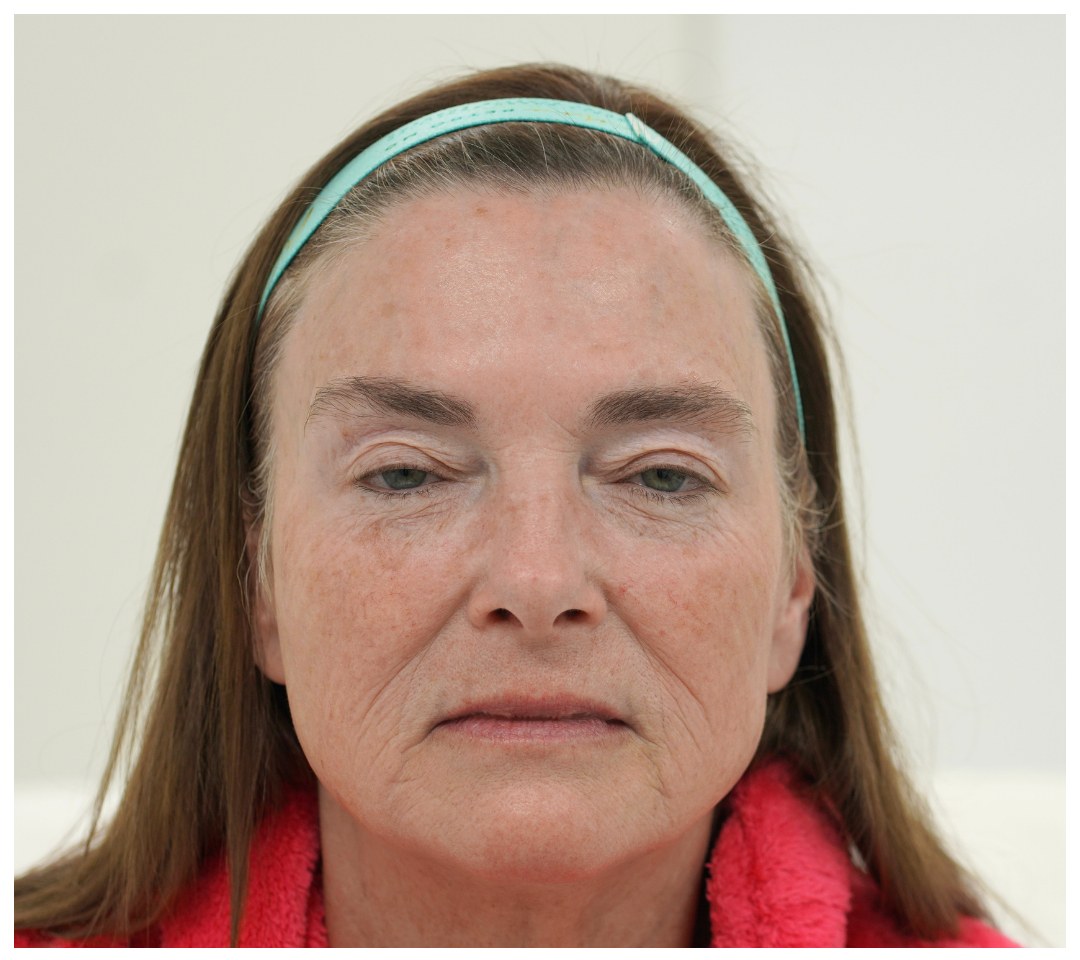
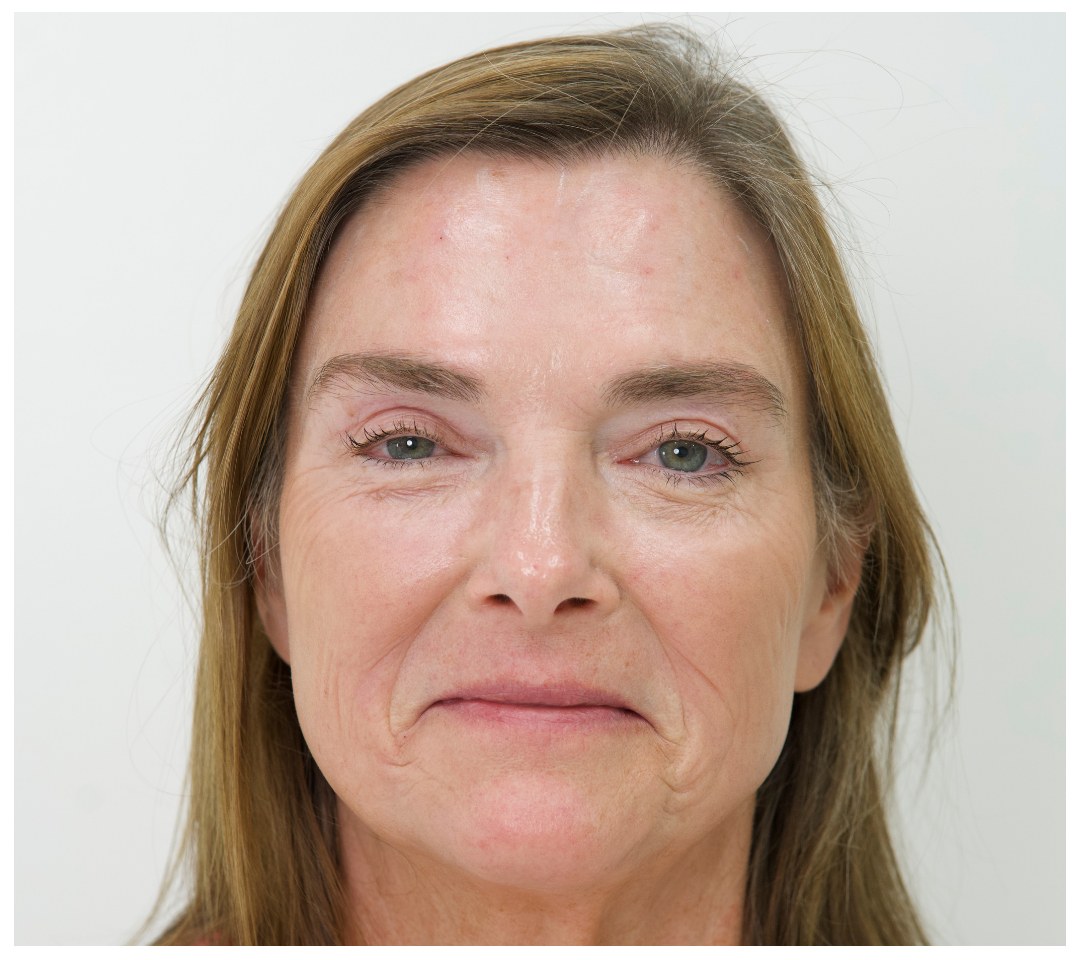
A PETRO patient · Case 20
Before & After
BeforeAfter
BeforeAfter↔
Drag to compare · Use arrow keys for precise control
Case 20 · Look just above the lashes. In the after photograph, more of the upper lid is visible beneath the fold. Brow position and expression can also change how much lid shows in a photograph. Results vary. The videos below feature a different patient.
Understand what you are seeing
Skin. Brow. Lid. Three different structures.
A heavy-looking upper eye can have more than one cause. Explore the anatomy Dr. Petro examines before deciding whether upper blepharoplasty is the right procedure.
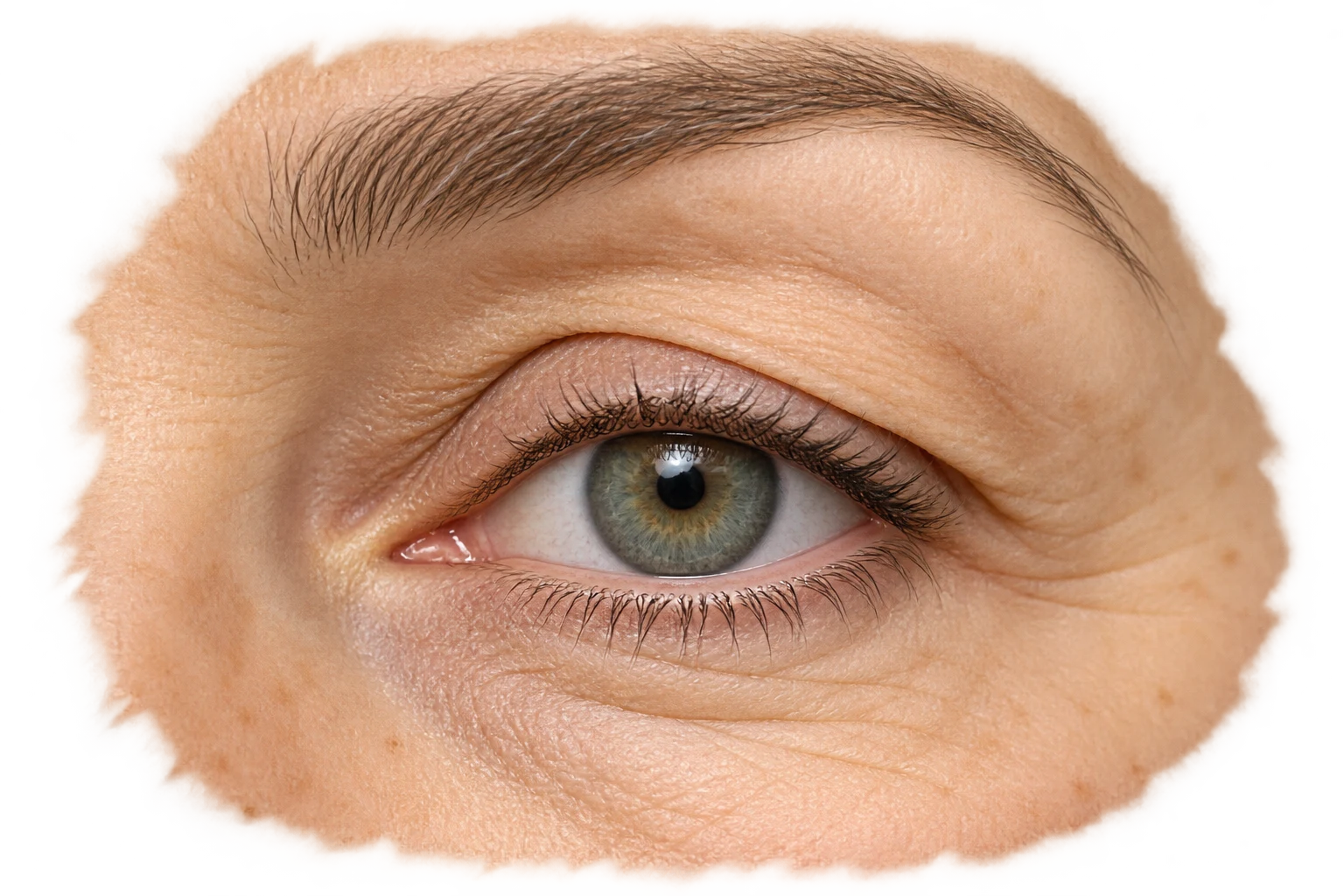
Anatomy illustration · Select a structure to explore.
01 / The skin fold
When skin covers the crease.
With time, upper eyelid skin can stretch and form an overhanging fold. The medical term is dermatochalasis. It can obscure the lid crease and rest near the lashes.
What upper blepharoplasty addresses: the excess skin. Dr. Petro plans the amount to remove while preserving enough skin for comfortable eyelid closure.
02 / The brow above it
Where the brow sits also matters.
A lower brow can push tissue toward the upper eyelid and add to the appearance of hooding. This is different from excess eyelid skin alone.
Why Dr. Petro checks it: removing lid skin does not reposition the brow. If brow position contributes, she discusses whether a brow procedure belongs in your plan.
The eyelid margin is the edge that carries the lashes. When that edge sits too low over the eye, it is called ptosis—a problem involving the eyelid’s lifting mechanism.
Why the distinction matters: skin removal alone does not correct true eyelid ptosis. Dr. Petro assesses lid position and eye function before recommending treatment.
The anatomy in more detail
The levator muscle and its tendon-like extension help raise the upper eyelid. Upper blepharoplasty treats redundant skin; ptosis repair addresses the lifting mechanism, while brow surgery addresses the brow above the lid. These concerns can occur together. The examination also includes eye closure, asymmetry, dry-eye history and previous eye surgery.
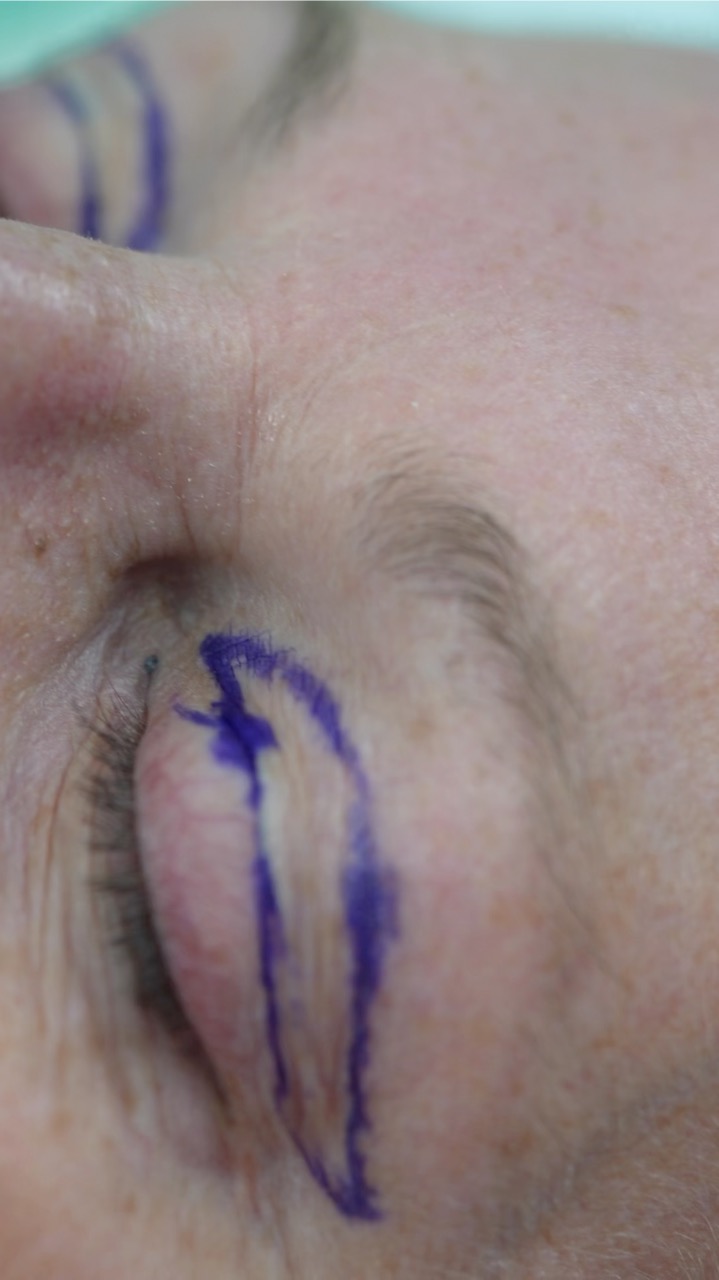
A closer look at preoperative marking · 13 seconds · no audio
Before the procedure
A crease. A carefully measured plan.
The upper eyelid incision is placed in the natural crease. Dr. Petro marks the skin to be removed, checking the relationship between the fold, the lashes and the brow.
The goal is to reduce the overhang while preserving eyelid function. Skin removal is tailored to each eye; decisions about muscle or fat depend on your anatomy. Watch the actual marking process, then open the surgical close-up below if you want to see the next step.
A preoperative marking photograph shows the planned treatment area. For visitors who want a closer look, the procedure photograph is available below.
View procedure photo — surgical close-up
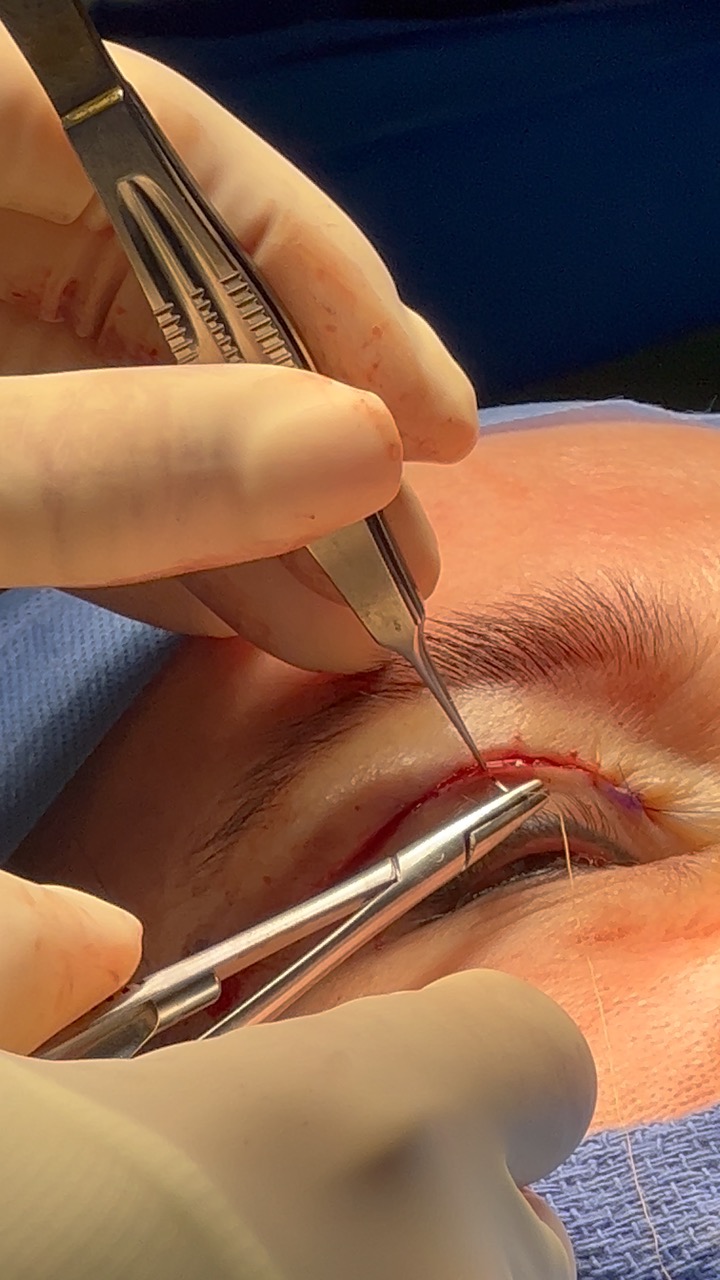
Clinical image showing an eyelid incision and suturing.
During the procedure.
Preoperative markings.
In her own words
“I did not want to look pulled or done.”
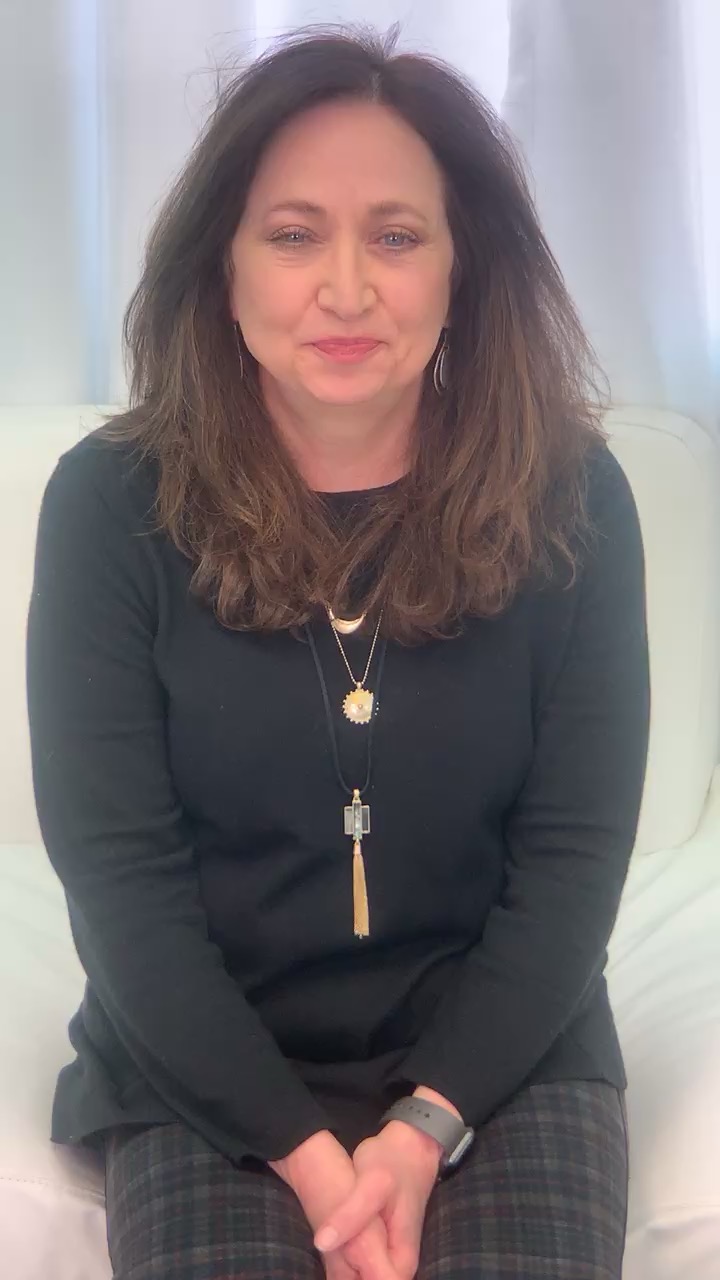
What did her friends notice? How did she feel about makeup? Hear the conversation in short, unretouched clips.
Her experience · 28 secondsRead the transcript
Okay. Did your friends know they didn't notice? No, they said I look like me. They say you look like you And I said look at the before and they're like, oh like what did you do with that like the lid? I said I used to try to hide it with a makeup or whatever. But even that Yeah, they were surprised. I think they're expecting me to look like real pulled or something, you know, but You look like you Which made me happy because I did not want to look pulled or done
One patient’s experience. Individual results and healing vary.
“Only two weeks in, I’m pretty excited.”
Makeup and her two-week check-in · 18 secondsRead the transcript
And I'm really excited to get in and play with it now and see what my eyes look like with makeup on because I used to have to try to figure it out to make them look more lifted, I guess, so. They look really good, let me show them. Only two weeks in, I'm pretty excited.
An early recovery check-in, not a final result or a recovery promise.
“This was a good first step.”
Why she chose to do it · 15 secondsRead the transcript
As I age, I'm going to try to do something to keep some, whatever youthful appearance and this was a good first step. You know, it wasn't a huge, huge procedure, but it was definitely something I could see a difference in.
The conversation comes first
Time to talk. Room for questions.
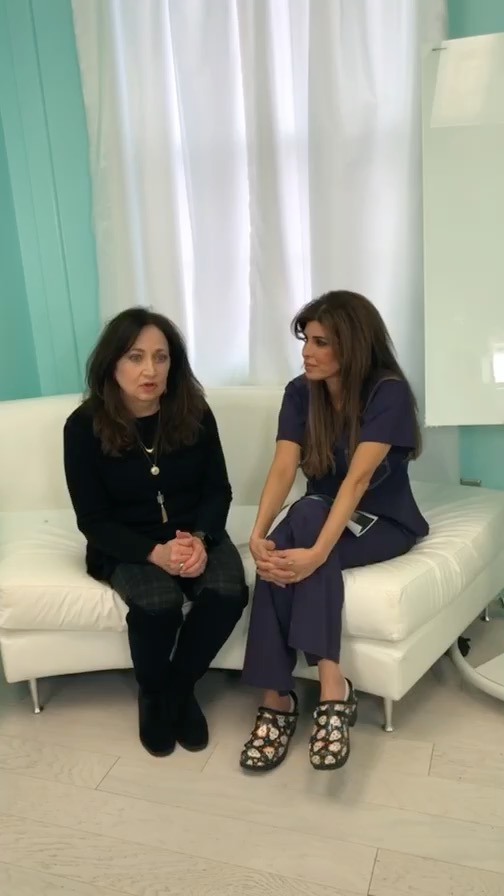
Bring what you notice, what you hope to change and the questions you haven’t asked yet. Your consultation is a conversation about your face and your choices.
A conversation at the practice.A moment from the patient conversation.
Recovery & investment
Plan for the procedure. Make room for recovery.
Before surgery
Your individual plan
Review eye health, medications, the proposed procedure and anesthesia with Dr. Petro. Arrange your ride and time away from your usual routine.
Early healing
Swelling & bruising
Expect an initial healing period. Follow your own instructions for incision care, activity and follow-up; eyelid comfort and swelling guide the return to normal routines.
At two weeks
One patient’s check-in
Watch the patient conversation on this page. It shows an early point in her recovery; swelling and scars can continue to settle afterward.
We assess your upper lids and brow, discuss what surgery could change, and explain the alternatives.
Your recovery.
Bruising, swelling, irritation and dry-eye symptoms can occur. Your return to work, exercise, contacts and makeup depends on your procedure and healing.
The complete cost.
We discuss the proposed surgical fee and what is included before you decide. Ask about anesthesia, facility fees and follow-up care so you understand the complete cost of your plan.
What if I have dry eyes or previous eye surgery?
Tell Dr. Petro before making a treatment decision. Your eye history can affect candidacy, planning and recovery.
What risks should I discuss?
Possible risks include bleeding, infection, dry eyes, difficulty closing the eyes, scarring, vision changes and additional surgery. Dr. Petro will explain the risks relevant to your individual plan.
Does the consultation commit me to surgery?
Start with what bothers you. We’ll explain the relevant options, and you decide whether to proceed.
Where is the scar?
The incision follows the natural upper eyelid crease and may extend toward the outer corner when needed for excess skin there. It is intended to sit within the eyelid’s contours. A scar remains and changes as it heals.
What will I feel during and after surgery?
Anesthesia is selected for your procedure and medical history. Afterward, tightness, irritation, swelling or discomfort can occur. Dr. Petro explains the anesthesia plan and how to manage discomfort before surgery.
When can I return to work, makeup and exercise?
These have different timelines. Desk work depends partly on swelling and how you feel; eye makeup, contact lenses and exercise also depend on healing and your postoperative instructions. Discuss your calendar with Dr. Petro before choosing a date.
Let’s make a plan
You tell me what you see. I’ll tell you what I see.
Choose The Beauty Blueprint (Complimentary Consult + FaceMap) with Dr. Melanie Petro. A complimentary 30-minute consultation; treatment is separate. Tell us you would like to discuss upper eyelid surgery.